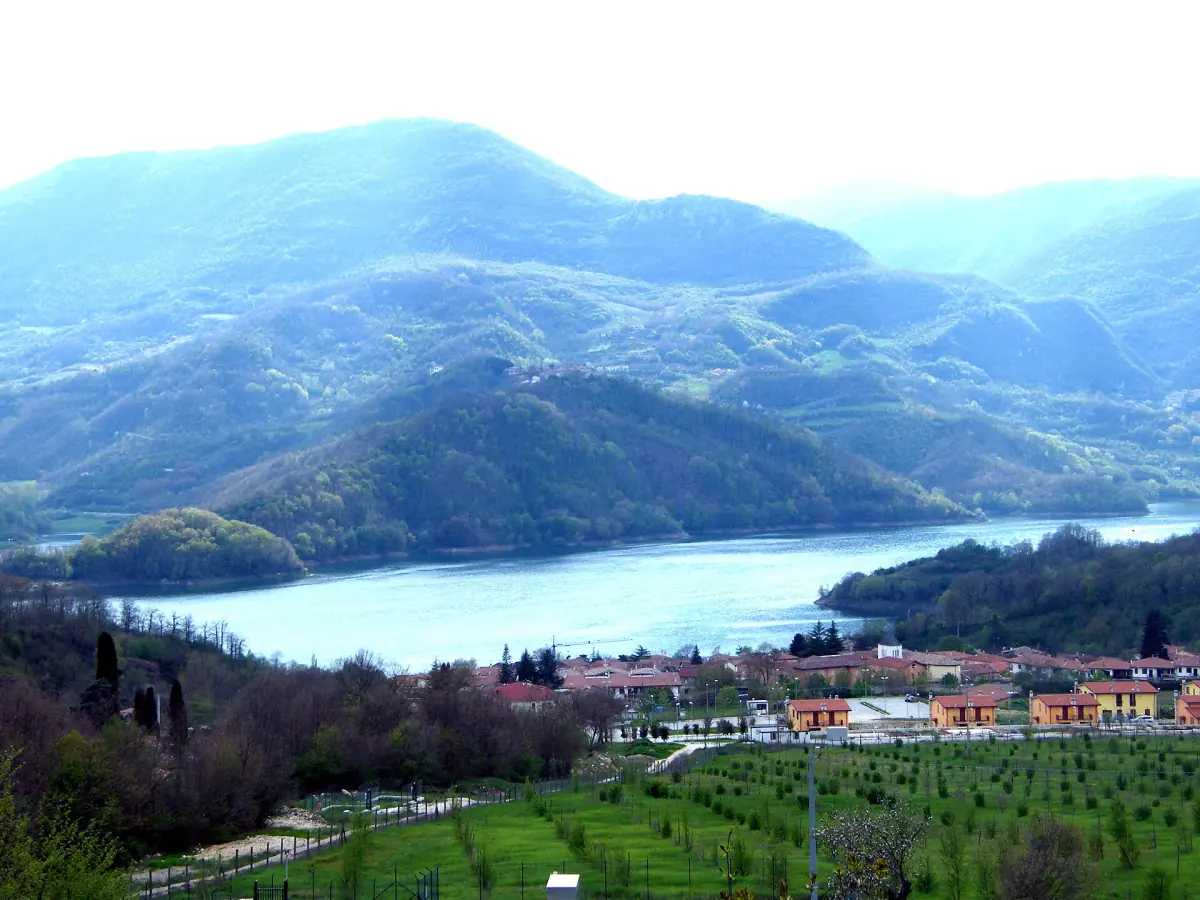
The drowned village of Lago del Salto
The Lago del Salto drowned village is not one single place. When the Salto was dammed in 1940, the new lake covered several settlements in the valley, among them Borgo San Pietro, Teglieto, Fiumata and Sant'Ippolito. The basin was built between 1938 and 1940, and the villages were rebuilt on the new shores at the same time.
That does not mean every house of every village lies under water, and you cannot walk down old streets. Plan your visit around the rebuilt villages, the monastery museum and the view over the lake. Anything under the surface is a question of the water level, not of the calendar.
If you would rather have a guide for the day, compare guided day trips around Lago del Salto and then use this page to decide where to stop.
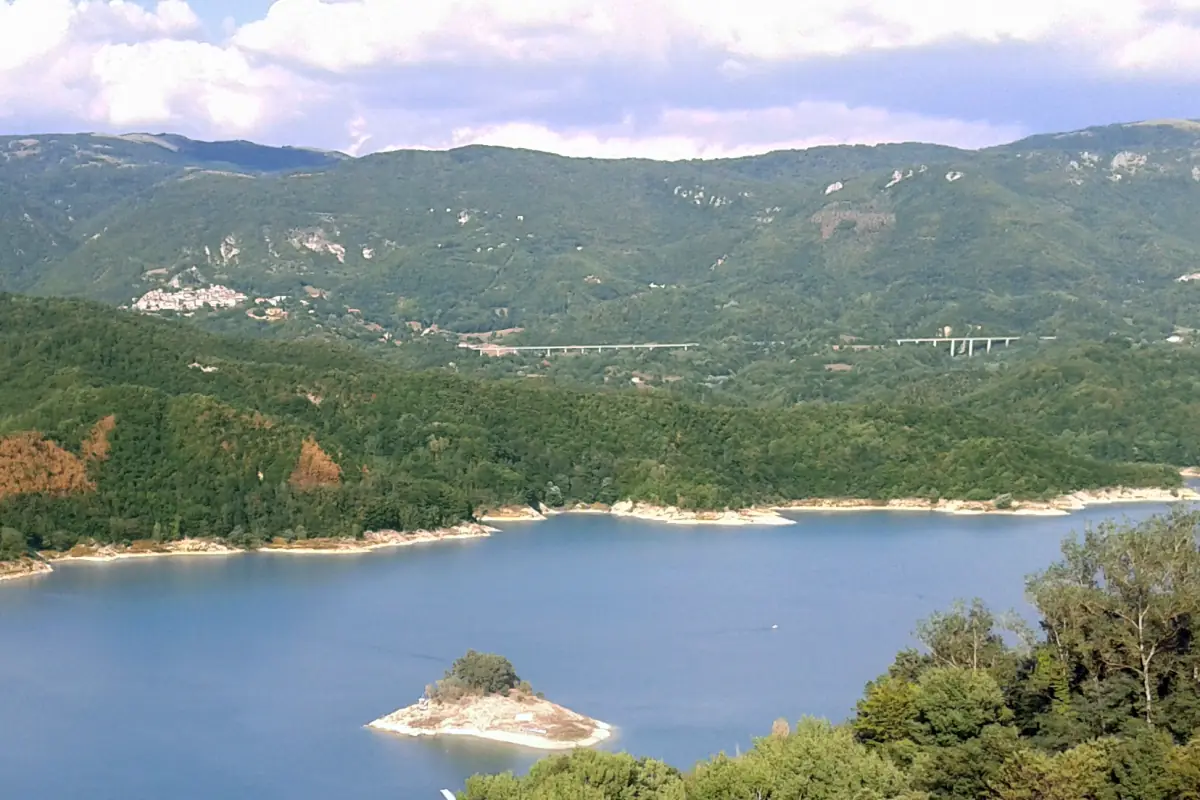
Borgo San Pietro today
The new village on the shore is the place to start.
The village
Borgo San Pietro is a modern settlement on the shore of Lago del Salto, in the municipality of Petrella Salto. It stands in for the older village that went under with the flooding, and it has a monastery.
The monastery museum
The museum in Borgo San Pietro keeps relics and documents of the old monastery of San Pietro de Molito. That monastery was founded in 1228 and abandoned when the lake rose in 1940. The usual opening hours are every day from 8:30 a.m. to 12:30 p.m. and from 4 p.m. to 6 p.m., with no reservation needed. Hours can change, so contact the museum before you go and ask about the entry price.
Saint Filippa Mareri
The monastery community links the place to Saint Filippa Mareri, who died on 16 February 1236. Her tomb is a pilgrimage destination. Service times and events change from year to year, so ask locally if you want to attend.
Day trips and tours around Lago del Salto
Guided tours around the lakes, Rieti and the Sabine hills, with live prices and availability.
What you can see at low water
At low water levels, remains of walls have occasionally stuck out of the lake. That is a general observation, not a schedule. No year, no spot and no access can be promised, so do not plan a trip around it.
Do not count on a church tower, on streets or on ruins you can walk through. The lake level changes with the season and with the use of the water, and a photo of an exposed wall says little about the day you arrive. Stay on public shore areas and marked paths.
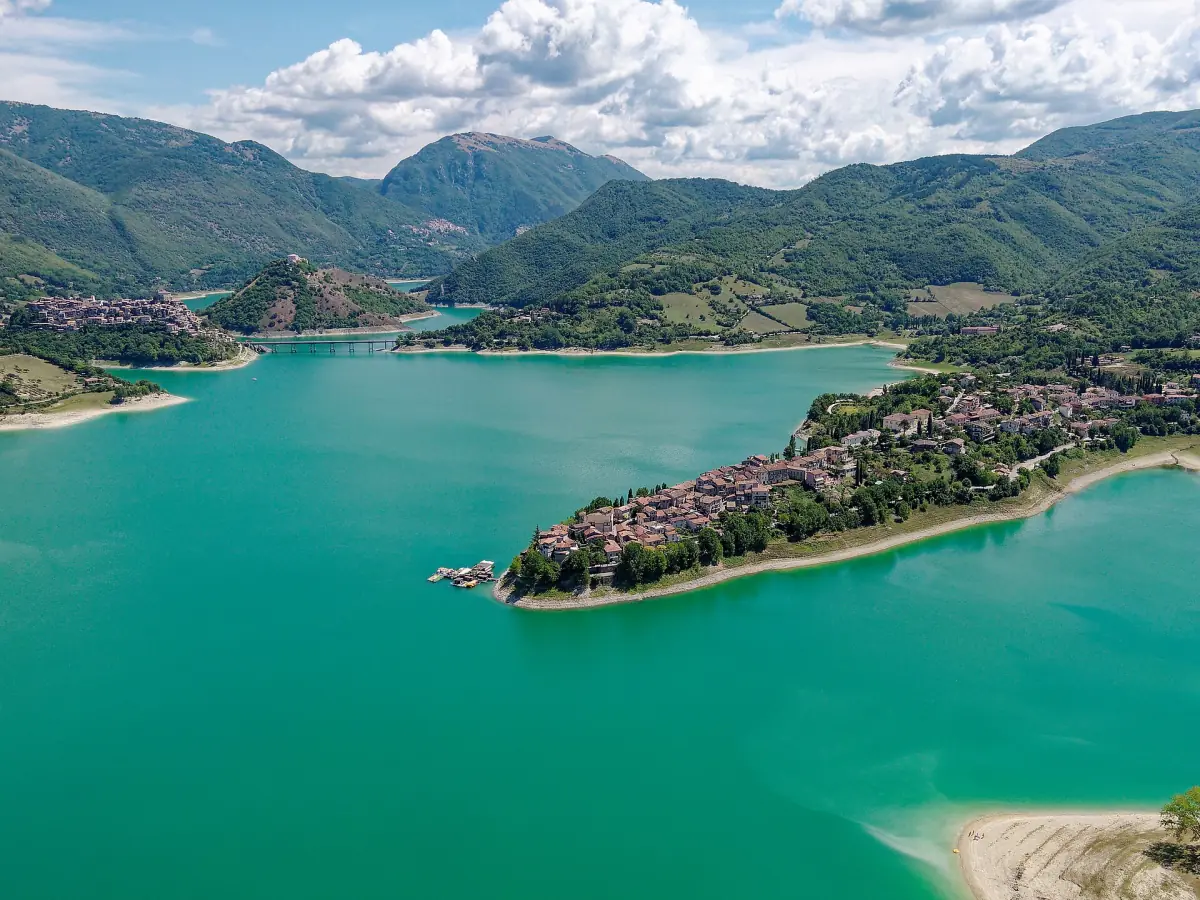
What is reliable is the setting: the lake between wooded slopes, the shore villages and the bridge at Fiumata.
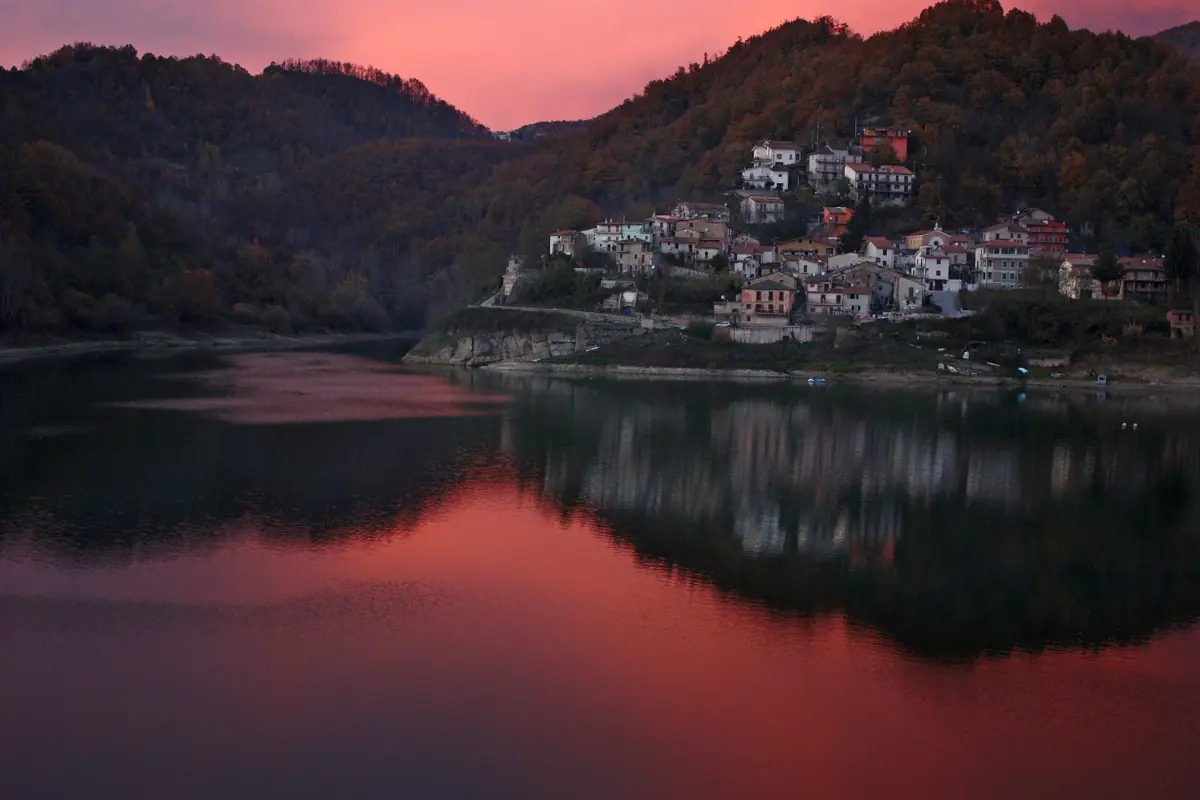
Fiumata and the shore villages
Rebuilt places around the lake.
Fiumata
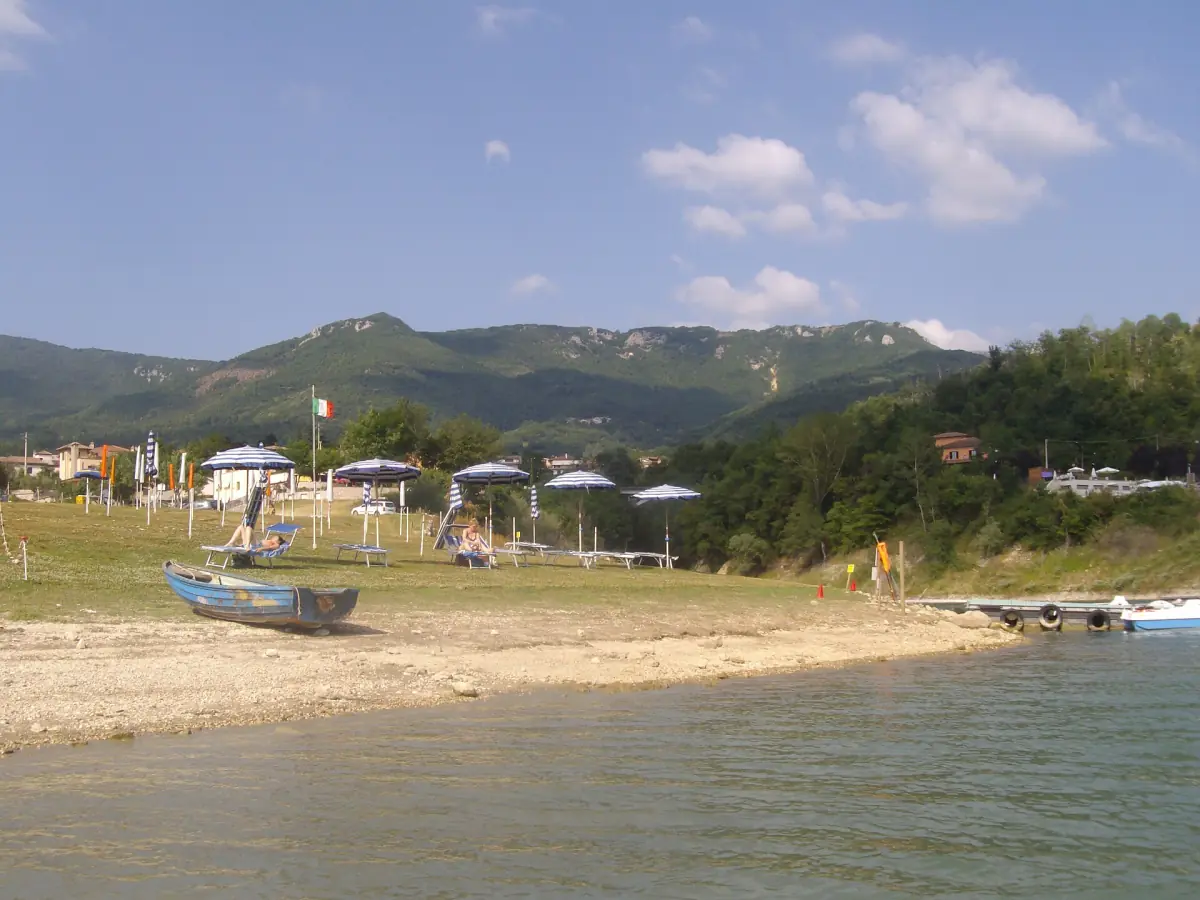
Fiumata is a rebuilt village on the shore, with a bridge. It is also one of the places with an equipped beach and kayak and pedal boat rental. Our guide to swimming in Lago del Salto has the details and the 2026 season.
Petrella Salto
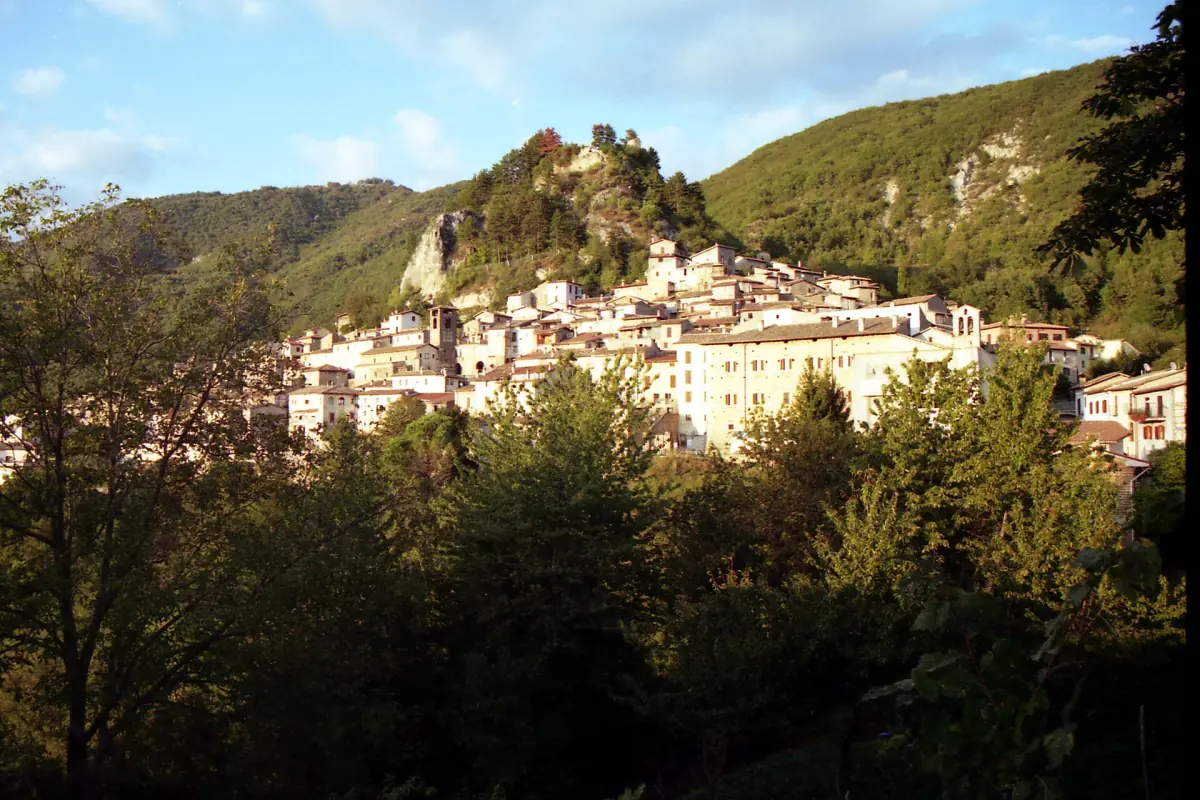
The historic village of Petrella sits on the slope above the lake, below the remains of its castle. The shore settlements are separate places.
Petrella Salto guide →One half day, in order
The museum has a break at midday, so go to Borgo San Pietro in the morning or after 4 p.m. Use the other part of the day for Fiumata and a walk at the shore.
The dam and the lake
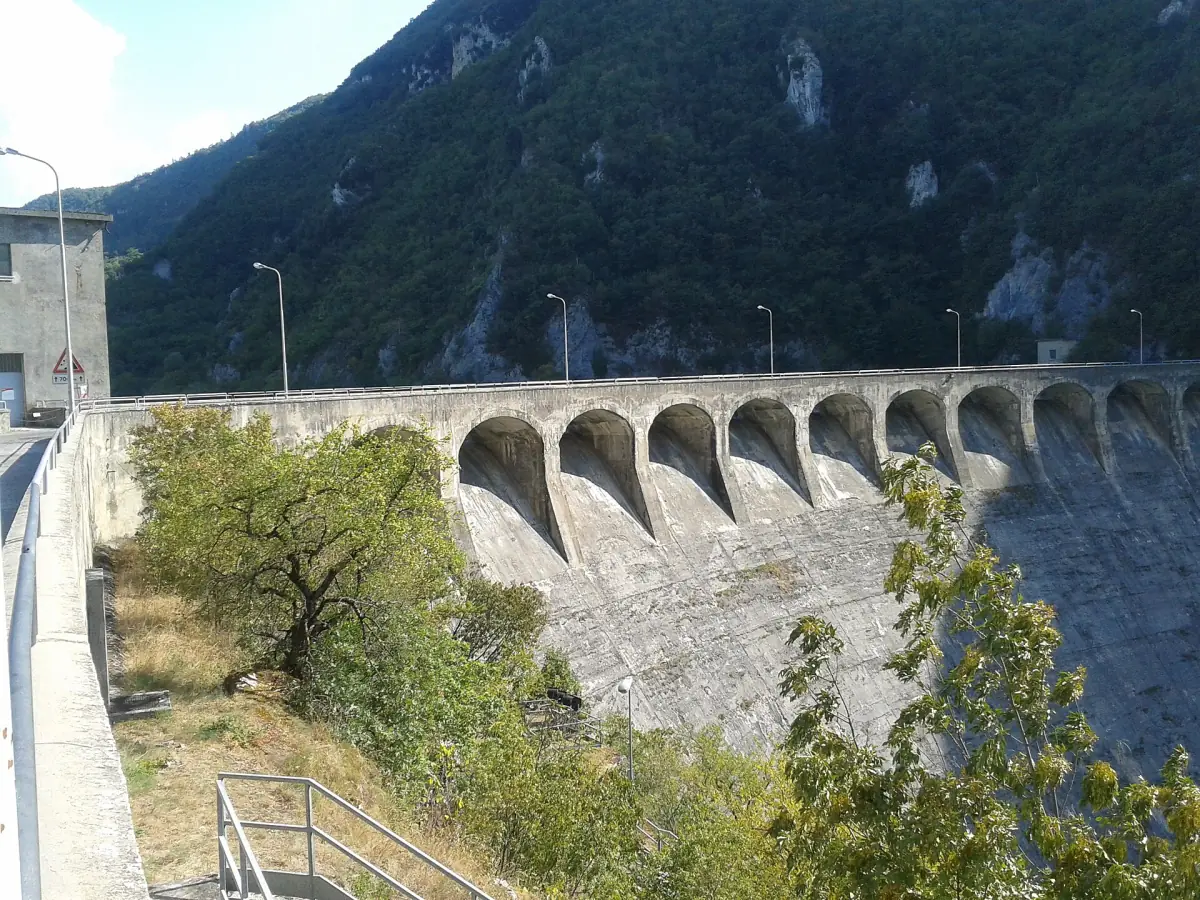
The Salto is an artificial lake in the Cicolano, in the province of Rieti, and the largest artificial lake in Lazio. The dam is a structure to look at from the outside. Its height is given as roughly 90 to 108 metres. Do not plan on entering the dam or walking along its top.
The Salto and the Lago del Turano are linked by an underground channel of about 9 kilometres, and both feed the power station at Cotilia. The Turano has its own villages, covered on the Lago del Turano page.
Lago del Salto drowned village: frequently asked questions
Can you see the drowned village in Lago del Salto?
Not reliably. Remains of walls have occasionally shown above the surface at low water, but no date and no spot can be promised. Rebuilt Borgo San Pietro and Fiumata are the places you can always visit.
Which villages were flooded when the lake was made?
The names tied to the 1940 flooding include Borgo San Pietro, Teglieto, Fiumata and Sant'Ippolito. Shore settlements were rebuilt afterwards, so the present villages stand beside the older sites.
What is Borgo San Pietro?
It is the modern village on the shore of the lake, with a monastery and a museum. The museum keeps relics and documents of the old monastery of San Pietro de Molito.
What are the opening hours of the museum?
The usual hours are every day from 8:30 a.m. to 12:30 p.m. and from 4 p.m. to 6 p.m. They can change, so contact the museum before you travel.
Can I visit the dam?
Treat it as a structure to see from the outside. Entering it or walking along the top is not something to plan on.
Is this the official website of the lake or the dam operator?
No. This is an independent travel guide. It is not the website of the lake municipalities, the Lazio region or the dam operator, and it is not connected to any tour operator or hotel.